
Interactive training
Choose your memory exercise
Each session uses newly generated tasks. Start with either visual pattern recall or ordered sequence recall; your results are stored locally so you can follow changes over time.
Visual working memory
Matrix pattern recall
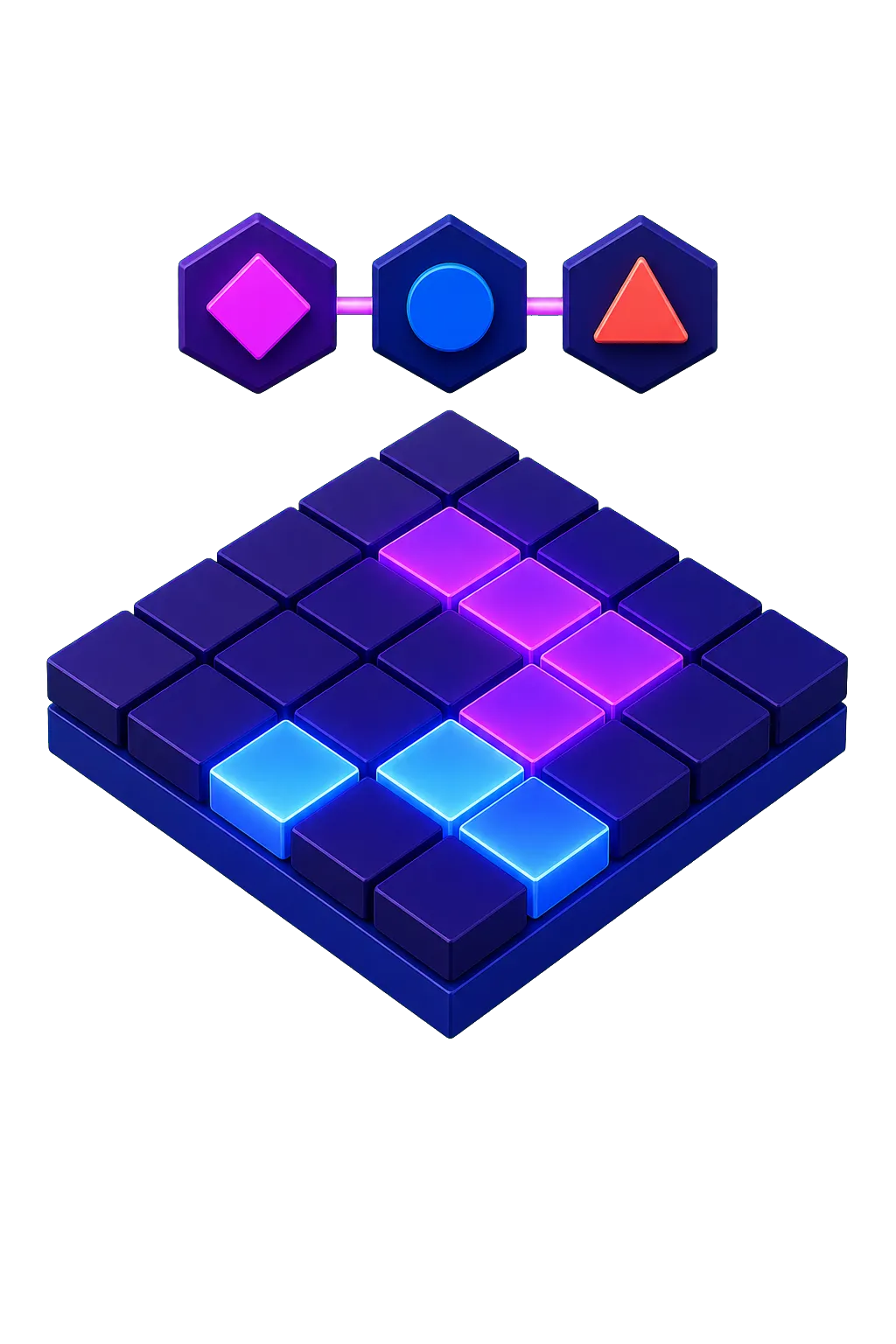
Study a connected figure highlighted inside a grid. When it disappears, rebuild the same shape by selecting the cells you remember.
- 10 questions per session
- Progresses from 3×3 to 5×5 grids
Ordered working memory
Number and emoji sequences
Watch a series of numbers or symbols one item at a time. Then place the same items back in their original order.
- 5 questions per session
- Sequence length grows from 3 to 7 items
Session complete
A simple practice loop
How memory reasoning practice works
The exercises separate the brief memorisation phase from the recall phase. That makes the task clear and lets you focus on accuracy rather than guessing.
Observe
Focus on the highlighted shape or each item in the sequence while it is visible.
Hold
Keep the locations or order in mind after the information disappears.
Reconstruct
Select grid cells or arrange the available items in the exact original order.
Review
See whether you were correct, complete the session and use the progress summary to guide the next practice.
Ready for a broader challenge?
Take the full IQ test
Apply your focus in the full IQ test
The memory exercises practise two specific task formats. The full World IQ Test includes a broader mix of visual, logical, numerical and spatial reasoning questions.
What is memory reasoning?
Memory reasoning combines short-term retention with active use of information. Instead of only recognising something familiar, you hold a temporary mental representation and use it to rebuild a pattern or preserve an order.
The matrix exercise emphasises visual-spatial locations. The sequence exercise emphasises serial order. Together they provide varied practice without claiming to measure a clinical memory condition or provide a formal IQ score.
What these exercises practise
- Holding visual locations in working memory
- Preserving the order of temporary information
- Directing attention while distractions are limited
- Checking a recalled pattern against a target
Practical recall strategies
- Group neighbouring matrix cells into one simple shape instead of memorising isolated squares.
- Give a long sequence a rhythm or split it into two smaller chunks.
- Keep your eyes on the exercise during the memorisation phase and remove avoidable distractions.
- Reconstruct the information calmly; speed is not included in your score.
- Practise briefly on several days and compare trends, rather than completing many sessions at once.
How to use this training effectively
Begin with one complete session and prioritise careful recall. The exercises already increase difficulty within a session, so there is no need to rush or repeat them continuously.
Compare several sessions rather than reading too much into one score. Sleep, interruptions, screen size and attention can all affect a single attempt. Progress here describes your performance in these exercises, not a medical assessment.
Questions about practice
Memory training FAQ
Is this an IQ test?
No. This page provides practice tasks for visual and ordered working memory. It does not calculate an IQ score or diagnose memory difficulties.
Why does the exercise become harder?
The grid grows from 3×3 to 5×5 and sequences grow from 3 to 7 items. The gradual change introduces a manageable challenge within each session.
Where is my progress stored?
Your completed sessions and any active session are stored in localStorage in this browser. Nothing is linked to an account, and clearing browser data removes the history.
How often should I practise?
Short, attentive practice on different days is more useful for comparison than many tired attempts in one sitting. Stop when concentration drops.